Picking a puff material sounds like a detail — until you open a complaint email about shedding fibers or a foundation that absorbs into the applicator. I’ve spent years matching materials to products, and I’ll walk you through which one earns shelf space in your line.
Velour puffs apply loose and pressed powder softly and evenly; cotton puffs are best for makeup removal, toner, and cleansing; mesh air-cushion puffs are built to bounce liquid foundation. Match the material to your product: velour for powder, cotton for cleansing, mesh cushion for liquid base.
Below I’ll break down how each one actually performs — feel, shedding, washability, and what it does to your margins — plus a table you can take straight to your product meeting.
What’s the Difference Between Velour, Cotton, and Air-Cushion Puffs?
They look similar from across a desk, but they are three different tools built for three different jobs.
Velour: The Powder Workhorse
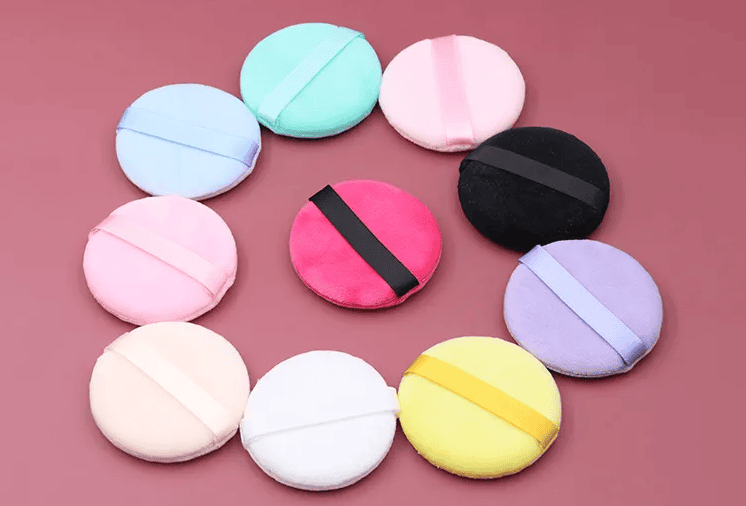
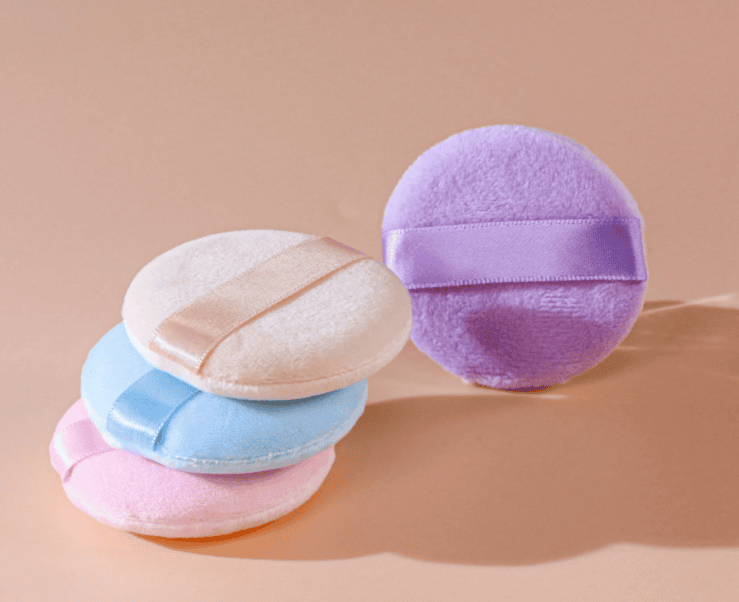
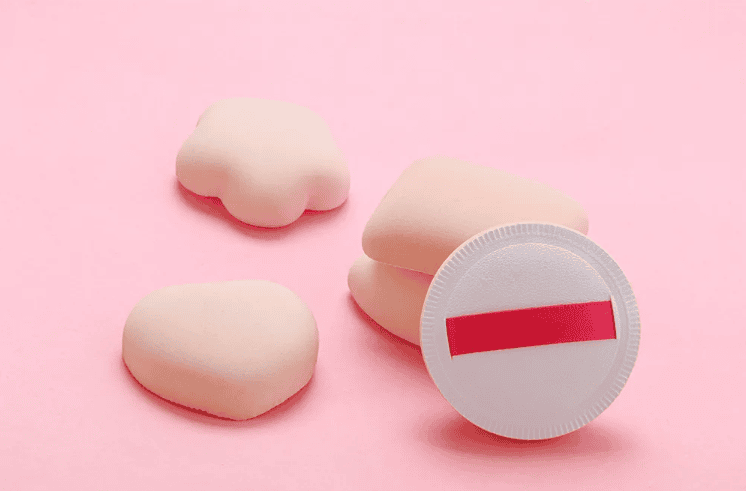
Velour is a dense, short-pile plush fabric — think the softest thing that ever touched your face. It holds a thin layer of powder on the surface instead of burying it, so your powder goes on skin, not inside the puff. This is what round, triangle, and heart puffs are almost always made of.
Cotton: The Cleansing Classic
Cotton puffs and rounds are woven, fluffy, and genuinely absorbent. That’s wonderful when you’re applying toner or removing makeup with micellar water — and terrible if you try to use one for setting powder, because it soaks up the product like a small, thirsty towel.
Mesh Air-Cushion: The Foundation Specialist
The air-cushion puff is a woven mesh surface stretched over a soft, latex-free sponge core. Its whole job is to bounce liquid foundation or BB cream into sheer, even coverage without absorbing it. If your product is a cushion compact, this is the puff that belongs inside.
How They Actually Perform
Feel on Skin
Velour feels plush — it’s the one customers press to their cheek before buying. Cotton feels light and clean. The mesh cushion feels bouncy, almost springy. If shelf feel sells, velour wins; if the product is liquid, feel doesn’t matter — function does.
Shedding and Quality
Here’s where cheap puffs reveal themselves. A low-density velour sheds tiny fibers onto freshly set makeup — the exact thing a customer posts about. Quality control lives in the pile density and the stitched edge: tighter stitching means less pilling after washes. Ask your factory for a fiber-loss test before bulk.
Washability and Reuse
- Velour: gentle hand wash, reshape, lay flat. It survives dozens of uses.
- Cotton: the workhorse — it tolerates real washing and keeps its shape.
- Mesh cushion: rinse, press out water (don’t wring — wringing is how sponges die), and air-dry flat.
The Absorption Math
Here’s a detail most buyers skip: every puff absorbs some of your product. The question is how much. A cotton pad buried in loose powder wastes a noticeable chunk of the compact’s contents; velour keeps powder on the surface; the mesh cushion is engineered to hold liquid in the sponge core and release it on bounce. For the customer, that means a compact lasts longer — which is quietly one of the best product claims you can make.
What It Does to Your Margins
The honest truth: all three are low-cost consumables. The material difference barely moves your cost per unit. What moves the needle is the branding — logo on the ribbon, custom color, packaging. Pick the material your product needs, and let the branding carry the margin.
Match Your Product to the Material
| Material | Best paired with | Feel | Washability | Margin story |
| Velour | Loose/pressed powder, setting | Soft, plush | Gentle hand-wash, reuse | Premium feel at low cost |
| Cotton | Makeup remover, toner | Fluffy, absorbent | Very durable | High-frequency reorder |
| Mesh cushion | Liquid foundation, BB cream | Bouncy | Air-dry flat | Standard for base-makeup compacts |
The Questions You’ll Ask Next
Can a Puff Be “Too Soft”?
Yes, and it sounds ridiculous until it happens. Ultra-plush velour with a flimsy ribbon slides around on the finger mid-pat. The ribbon isn’t decorative — it’s the control surface. Stitch it well, and the puff behaves.
What About Latex-Free?
If “sensitive skin” is anywhere on your packaging, your mesh cushion should be latex-free. It’s standard in our factory, but worth writing into your spec — and worth asking for documentation on, the same way you’d ask for OEKO-TEX certification.
Can I Mix Materials in One Gift Set?
Absolutely — and it’s often the smartest move. A set with a velour puff for setting, cotton rounds for cleansing, and a mesh cushion for foundation tells a complete routine story. Buyers love this because the set feels like three products for the price of one; we love it because it’s the same factory, the same ribbon logo, and one MOQ conversation.
Does the Material Affect Where My Logo Goes?
Not really. Every puff gets your logo on the satin ribbon, regardless of material. What changes is print placement: velour takes ribbon printing beautifully, while printing directly on a fluffy body is a mug’s game — the texture eats the detail.
The Bottom Line
Stock velour for your powder line, cotton for cleansing and toner, and mesh cushion for any liquid base. Don’t overthink it: match the material to the product, stamp your logo on the ribbon, and let the repeat orders do the talking.
Send us your product list, and we’ll tell you which material fits each SKU — with samples in hand so you can feel the difference yourself.
About PANDA SPONGE: manufacturer of cotton, velour, and air-cushion powder puffs — round, triangle, heart, and custom shapes, with private-label logo printing, custom colors, and custom packaging for beauty brands worldwide.

Maggie Peng serves as the esteemed Product Manager at Panda Sponge, where she has garnered a wealth of experience and expertise over the course of five years. With a primary focus on product design, testing, and development, Maggie has consistently exhibited her prowess in these domains.