Hey, I’m part of the product team at PANDA SPONGE. My days are spent in our lab with engineers, testing materials. The biggest question we get from savvy procurement pros like you is: “How do we balance cost, performance, and sustainability?” Today, I want to chat about our answer: the fusion of TPU film and liquid PU. It’s not a material swap. It’s a complete rethink of how a makeup tool should be built.
The core of the next-gen perfect makeup sponge is a proprietary process that fuses TPU film and liquid PU at a molecular level into a seamless, monolithic structure. This solves the delamination problem of traditional composites, achieving unmatched consistency, durability, and a unique feel, while giving brands a powerful tech story and sustainability angle.
But why is this “fusion” so critical, and not just another “lamination”? Let me break down the three core advantages and how they solve real problems for you and your brands.
Why “Fusion” Is a Game-Changer in Beauty Tool Manufacturing
I know you’ve seen a million supplier samples and spec sheets. Foam, silicone, all sorts of composites… they can look similar. But the devil’s in the details—specifically, in how the materials are joined.
At PANDA SPONGE, we spent years solving a universal industry headache: making different materials last together, not just stick together temporarily. Our solution was to ditch “bonding” and master “fusion.”
#1 Goodbye, Delamination: Why “Molecular Fusion” Beats “Physical Bonding” Every Time
Think of your favorite sandwich. If the bread and filling just sit together and fall apart after a few bites, it’s a bad experience. Traditional sponge “lamination” is like that shaky sandwich. Whether it’s silicone on foam or TPU film on a dry PU block, it relies on the adhesive strength of glue or heat pressing.
The problem? The two materials remain fundamentally separate. Repeated squeezing, washing, and exposure to liquids and oils constantly stress that bond line. The result? Lifting edges and peeling layers—the top cause of quality complaints that haunt procurement and customer service teams.
Our fix started with a key insight: TPU film and liquid PU have a natural “affinity” for each other.
In our process, we introduce liquid-state PU to the TPU film under specific heat and pressure. What happens isn’t surface gluing. At the interface, a subtle interaction occurs, allowing the materials to intertwine and fuse, curing into one true, continuous monolith.
Imagine stirring honey into warm water until it integrates, versus gluing two pieces of glass together.
What This Means For You:
- Lower Return Rates: It eliminates product failure from delamination at the root, protecting your brand reputation.
- Longer Product Lifecycle: A more durable tool means less frequent consumer replacement, indirectly boosting your sustainability narrative.
- The PANDA SPONGE Edge: We’ve mastered the precise control of this process. Achieving consistent, high-level fusion is a technical barrier that factories using old lamination methods can’t easily cross.
#2 From “Foam Lottery” to Perfect Consistency: How Liquid PU Delivers Predictable Performance
If you’ve sourced traditional foam sponges, you know the drill. Even within a batch, natural variations in foam density, pore size, and bounce occur. We call it the “foam lottery”—you can never be sure the next batch will feel exactly like the last.

For brands built on consistent results and premium experience, that’s a hidden risk.
Enter Liquid PU. Before it fuses with the TPU film, it’s a flowable, precision-pourable compound. This changes everything:
- A Uniform, Non-Porous Core: It cures into a perfectly even elastic body—no air pockets, no density gradients. No “soft spots” or “hard spots.”
- “Programmable” Feel: By tweaking the liquid PU formula, we can “design” the final product’s firmness, rebound speed, and Q-factor like a recipe. Need a fast-bouncing sponge for liquid foundation? A supportive one for cream formulas? We can match it precisely.
- Zero Batch Variance: Once the formula and process are set, Sponge #1 and Sponge #1,000,000 will have an identical core feel.
What This Means For You:
- Supply Chain Peace of Mind: No more anxiety over quality shifts between batches. The sample you approve in development is the mass-produced standard.
- A Tool for Product Innovation: You can develop sponges with specialized feels for different lines (e.g., dewy serum foundation vs. full-coverage stick), creating a more professional product matrix.
- The PANDA SPONGE Edge: We’re not just manufacturers; we’re your “Tactile Solution Partners.” Our R&D team excels at co-developing, testing, and locking in specific feel formulas, ensuring your product is unique from the inside out.
#3 The Material Truth: Why We Didn’t Choose “Greener” Silicone
Let’s address this head-on. Yes, food-grade silicone has advantages in raw material eco-perception and safety. Many clients initially ask us for it.
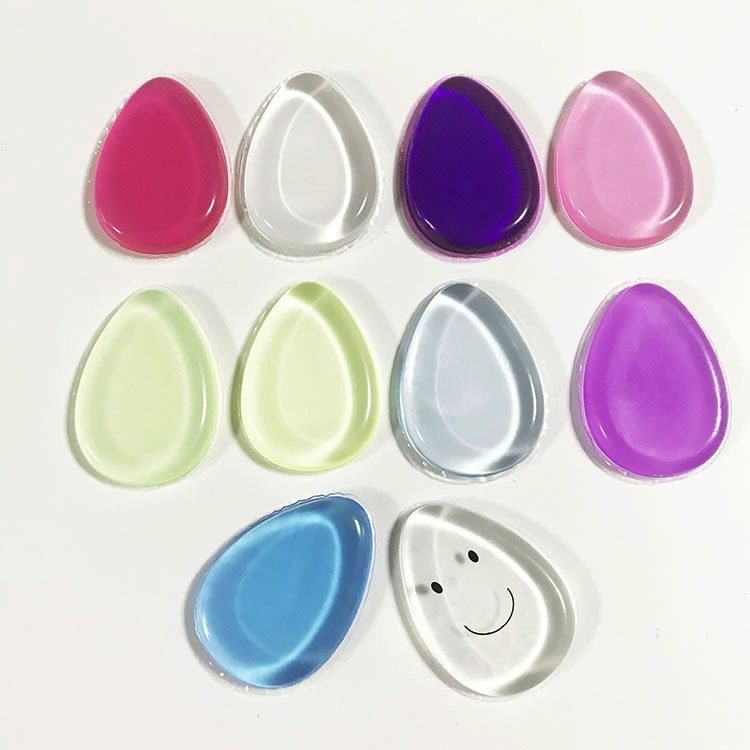
But through extensive testing, we hit a fundamental physical barrier: Silicone (even liquid silicone) and TPU film are chemically dissimilar polymers. They lack molecular affinity, creating a high risk of separation over time.
Simply put, they’re like oil and water—they don’t truly unite. Forcing a bond compromises long-term durability. We refuse to trade a marketing point for a product with a built-in weakness.
So, we made a responsible trade-off: We chose the TPU/PU combination that excels in safety (REACH compliant), durability, and fusability.
This doesn’t mean we ignore sustainability:
- Durability Is Sustainability: A sponge that lasts twice as long due to fusion technology creates less actual waste than a “biodegradable” one that falls apart quickly.
- Efficiency Saves Resources: The non-porous TPU surface cleans easily and barely absorbs product. The tiny amount of foundation saved per use adds up to significant resource conservation.
- Compliance & Transparency: All our TPU and PU materials are free of phthalates and come with full documentation, meeting the strictest EU/US market standards.
What This Means For You:
- A Trustworthy Partner: We choose transparent dialogue about tech limits over blindly saying “yes.” This builds long-term trust.
- A Stronger, Honest Selling Point: You can tell a compelling, authentic story about “fusion tech,” “superior durability,” and “product savings.”
- The PANDA SPONGE Edge: We focus on perfecting our chosen path. Our deep specialization in TPU/PU fusion ensures the product we deliver is top-tier in the dimensions that matter most: consistency, durability, and feel.
Conclusion
So next time you evaluate a makeup puff sponge, ask the supplier: “Are your materials stuck together, or are they grown together?” At PANDA SPONGE, we believe the best tools come from deep material science and uncompromising process control. Choosing fusion means choosing reliability, consistency, and long-term value. Let’s bring the next stunning “single-material feel” tool to the market, together.

Maggie Peng serves as the esteemed Product Manager at Panda Sponge, where she has garnered a wealth of experience and expertise over the course of five years. With a primary focus on product design, testing, and development, Maggie has consistently exhibited her prowess in these domains.