
Hey there. If you’re sourcing makeup sponges, you’ve heard the hype: “premium material,” “RUBYCELL-like,” “patented foam.” It’s confusing. Let’s cut through the marketing and talk about how to actually spot quality—without blowing your budget.
To identify true high-grade makeup sponge material, ignore generic claims and conduct a 3-part practical audit: First, perform the Water Test to check for instant, even expansion and a soft, cool finish. Second, conduct the Stress Test by repeatedly squeezing and twisting a wet sponge to assess its rebound durability and seam integrity. Finally, trust the Feel Test, where a dry, velvety-soft texture that becomes exceptionally smooth when wet indicates superior pore structure and material processing.
Stick with me for the next five minutes. I’m going to give you a simple, step-by-step guide—the exact checks we use at our own factory—so you can confidently judge material quality with your own hands.
#1 The “Magic” Isn’t in the Name, It’s in the Water
Let’s start with the most revealing test, and it doesn’t need a lab—just your kitchen sink.
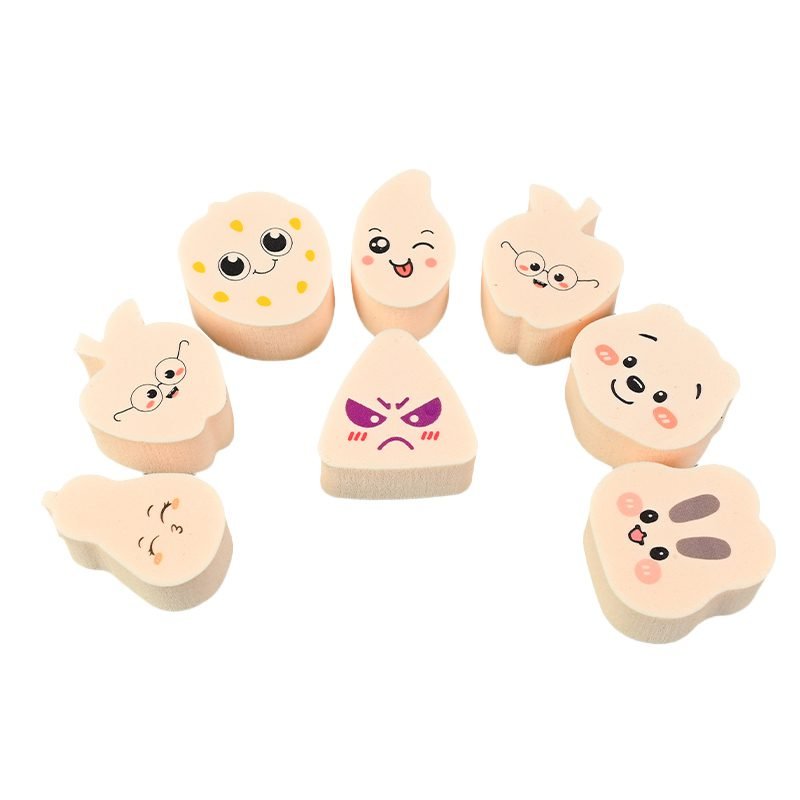
Forget what a supplier calls the foam. Its true character is revealed the moment it gets wet. A top-tier, hydrophilic (water-loving) non-latex foam has a specific, engineered pore structure. When you run it under room-temperature water, it should absorb moisture instantly and expand uniformly, typically doubling in size. It should feel heavy, cool, and incredibly soft—like a dense, damp cloud.
Why is this so crucial? That even expansion is what allows for a seamless, streak-free foundation application. A cheap, closed-cell foam will absorb slowly, expand patchily, or worse, feel slippery. That unevenness translates directly to a blotchy finish on your customer’s face.
Here’s the insider tip: At Panda Sponge, we start our quality control with this exact “First Plump” test on every batch. Whether it’s a custom blend for a luxury brand or a high-value line for a growing business, we engineer the material to hit that perfect, consistent expansion. It’s the non-negotiable foundation of performance.
#2 The Squeeze Test: Your Best Defense Against Returns
Anyone can make a sponge that feels good once. The real test is if it feels good on the fiftieth wash. This is where you separate the durable workhorses from the disposable duds.
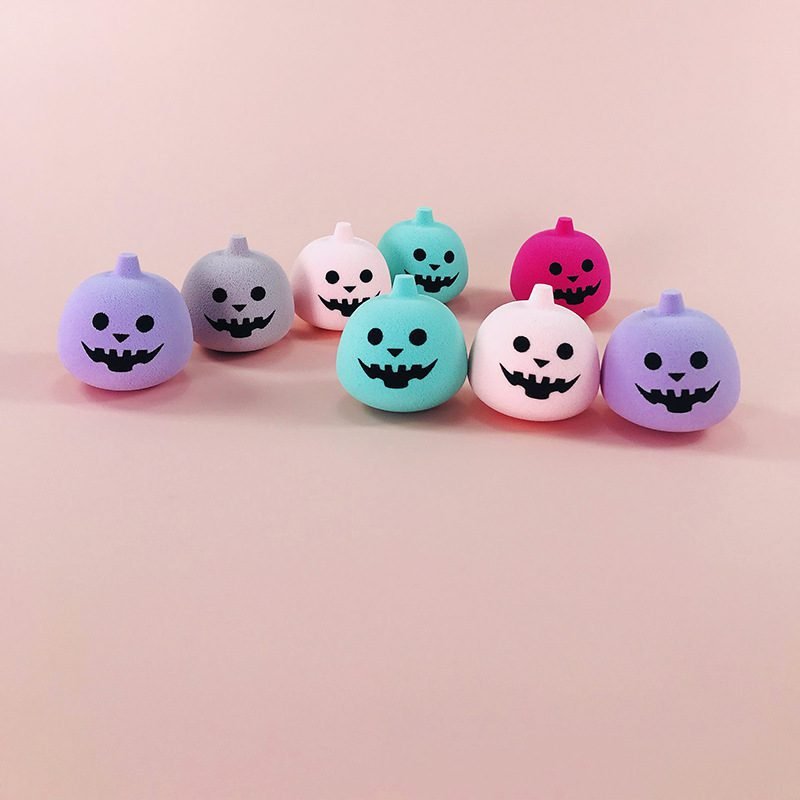
Here’s your actionable durability check, straight from our factory floor: After wetting the sample, lather it with a bit of soap. Now, don’t be gentle. Give it a firm, twisting squeeze from the core—mimicking how a customer will wring it out. Rinse and repeat this hard squeeze 10-15 times.
Watch for two things:
- Rebound: Does it spring back to its original shape immediately every single time, or does it start to stay misshapen?
- Integrity: Are there any tears starting at the seams? Is it shedding little bits of foam?
A sponge that fails here will fall apart in a few weeks, leading directly to one-star reviews about “falling apart” and “not worth the money.” For you, that means returns, damaged brand reputation, and lost customers.
This is where our manufacturing philosophy at Panda Sponge pays off for brands. We’ve seen how weak bonding agents cause seams to split. That’s why we focus on seamless molding techniques and reinforced cell structures. Our goal is to create a sponge that wears out gracefully with use, not breaks apart under stress. For you, the buyer, this translates to fewer customer service nightmares and a product that builds loyal fans.
#3 Feel is the Final, Unbeatable Lie Detector
Finally, let’s talk about touch. After all the tests, your hands and fingers are your most sophisticated instruments. The sensory experience is what turns a utilitarian tool into a “must-have” beauty ritual item.
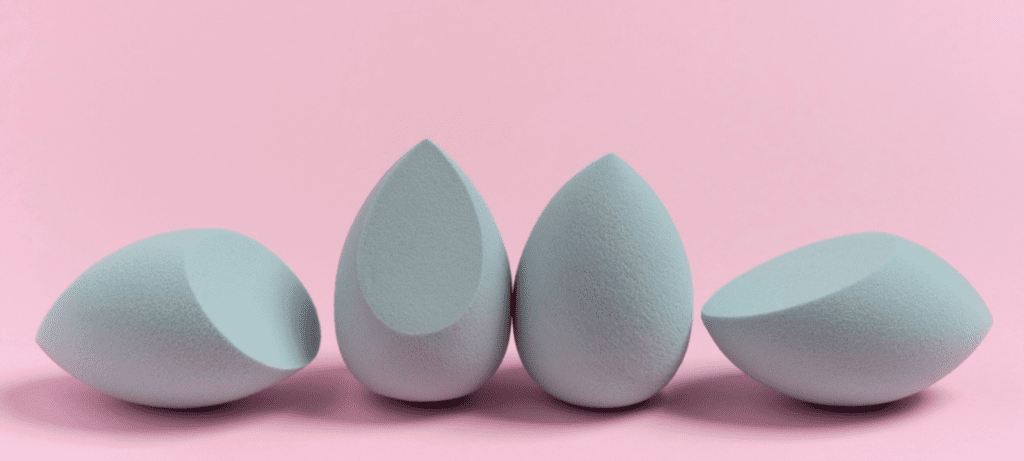
Evaluate the sample in two states:
- Dry: Run your thumb over it. It should feel consistently velvety and smooth, not chalky, gritty, or uneven. That gritty feel often indicates filler materials or poor milling.
- Wet: This is the true reveal. A premium material will feel exceptionally soft, almost buttery-smooth, and cool against the skin. It should never feel rubbery, dense, or slippery.
This luxurious handfeel isn’t an accident; it’s engineered. It comes from superior raw polymer blends and precision-polished molds that create a flawless, pore-uniform surface.
Think about it from a brand perspective: This “feel-good factor” is a massive silent salesman. It’s what makes customers unbox your product and immediately feel they’ve invested in something premium. When we work with clients at Panda Sponge on custom projects, this tactile quality is a key focus area. We can adjust density and surface texture to match a brand’s desired positioning—whether it’s ultra-plush for a luxury feel or slightly more resilient for a professional, long-wearing tool. It allows a small brand to deliver a big-brand sensory experience right out of the gate.
Conclusion
So, next time a supplier dazzles you with fancy terms, remember your three tools: water, pressure, and your own hands. Master these tests, and you’ll never overpay for underwhelming material again. You’ll source sponges that perform, last, and make your brand shine.
Call to action
Ready to move beyond generic samples and find a partner who truly understands material performance? At Panda Sponge, we don’t just supply sponges; we engineer solutions based on the very principles outlined above. Our expertise in custom formulation allows us to fine-tune density, porosity, and rebound to match your exact brand needs—whether you’re aiming for luxury softness or professional durability. Beyond material, we excel in full customizations, from unique shapes and precise Pantone colors to packaging that elevates the unboxing experience. We specialize in OEM/ODM services for growing brands, offering competitive MOQs that make premium quality accessible. Let’s turn your vision into a tangible, high-performing product. Contact us today to request your custom sample kit and feel the Panda Sponge difference for yourself.

Maggie Peng serves as the esteemed Product Manager at Panda Sponge, where she has garnered a wealth of experience and expertise over the course of five years. With a primary focus on product design, testing, and development, Maggie has consistently exhibited her prowess in these domains.